Combined bearings
Combined bearing — radial + axial roller, weldable hub
A combined bearing carries radial and axial loads on a single unit. The hub is machined from weldable steel so it can be welded directly into a mast rail, guide track or structural frame — without disassembling the bearing.
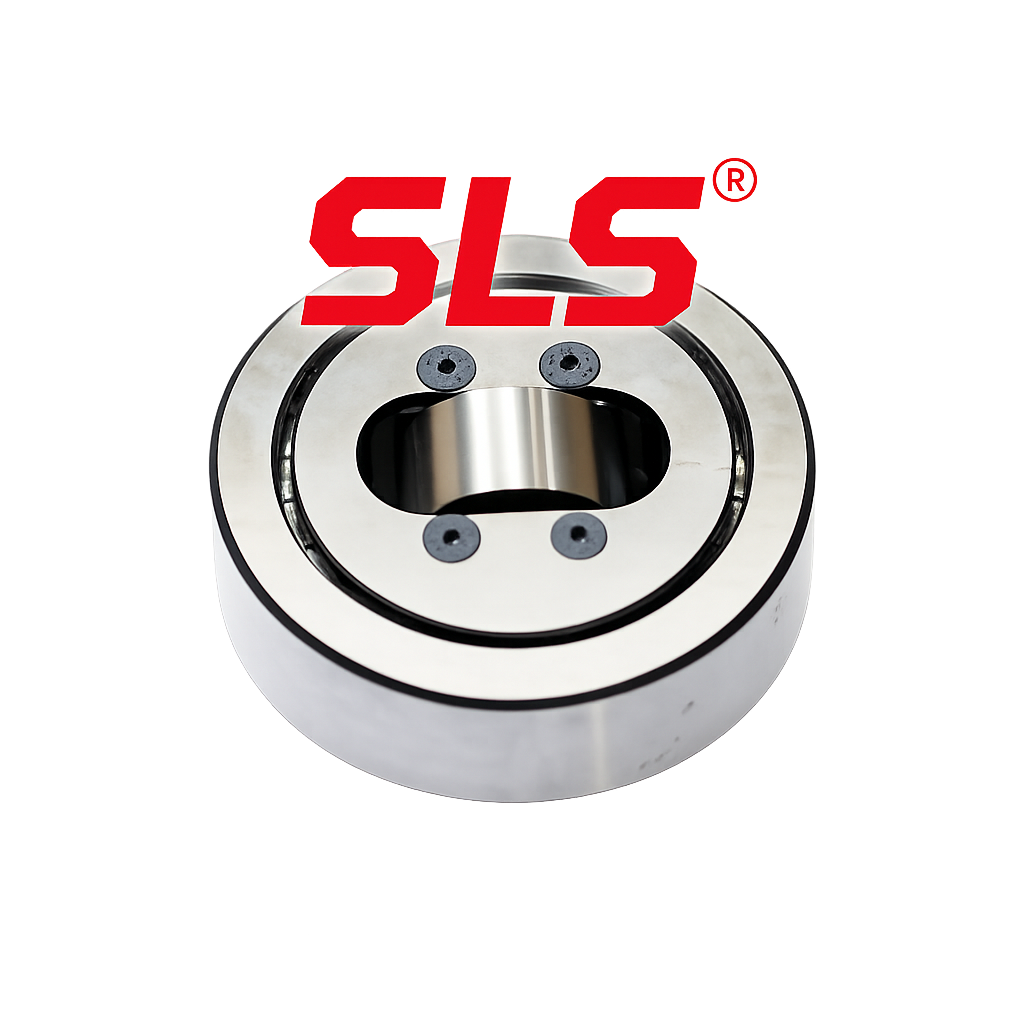
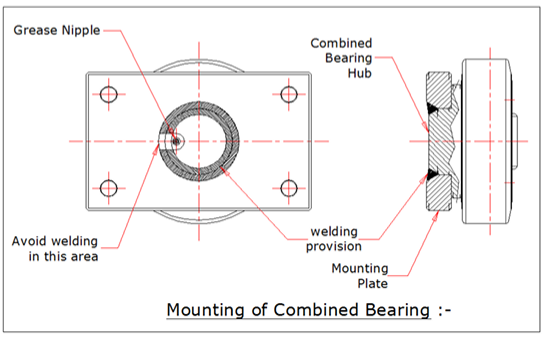
Weld-in mounting of a combined bearing.
Mounting — weld it in, don’t bolt it on
The combined bearing hub is made from weldable steel. The recommended method is to drill a hole in the mounting plate to locate the hub diameter, then weld from behind. The chamfer or weld gusset keeps the weld flat with the plate surface.
You do not need to disassemble the bearing to weld it into position — just keep the torch or arc away from the hardened steel radial roller and axial roller so the raceways are not heat-affected.
- Drill mounting-plate hole to hub OD; locate hub, weld from behind.
- Grease nipple stays accessible; do not weld in that area.
- Keep torch/arc away from the radial and axial roller raceways.
Where they work
Combined bearing applications
| Application | Bearing role |
|---|---|
| Forklift and reach-truck masts | Guides carriage movement while carrying side and thrust loads |
| Telehandlers and stacker cranes | Compact guidance where load direction changes during travel |
| Industrial lift columns | Controls radial load and lateral positioning in one unit |
| Heavy sliding gates | Runs inside structural channels with axial guidance at the gate edge |
| Material-handling guide tracks | Supports rollers in welded frames where a bolt-on housing is impractical |
Identify the correct size
Measurements needed for selection
Combined-bearing series are not dimensionally interchangeable by name alone. Send these values so the rail fit and load capacity can be checked against the maker’s current drawing.
- Radial roller OD
- Outside diameter that runs against the rail or channel
- Axial roller OD and width
- Thrust roller envelope and available side clearance
- Hub locating diameter
- Hole diameter used to locate the weldable hub
- Overall width
- Complete installed bearing envelope
- Rail or channel profile
- Internal track dimensions and running faces
- Radial and axial load
- Working load, peak load, speed and duty cycle
- Existing reference
- Any stamped number, machine model or old-bearing photograph
Request a dimensional match
Include the old reference number and clear front, side and mounting photographs. Dimensions and load ratings are confirmed from the selected manufacturer’s drawing before quotation.